Ecodriveways – Good for You and the Environment

CATEGORIES

LANDSCAPE MASTER PLANNING & GARDEN DESIGN SUSTAINABLE LANDSCAPING & NATIVE PLANTS RAINWATER CONSCIOUS LANDSCAPE FEATURES NATURAL STONE HARDSCAPE & POROUS PAVEMENT NATURAL & ORGANIC LAWN CARE MISC

RECENT POSTS

By formecology LLC April 14, 2026
What Drives the Cost of a Landscape Project? No two landscape projects are the same, which is why pricing can vary so much from one property to another. Understanding what affects cost helps homeowners make better decisions and prioritize where to invest. 1. Site Conditions Your existing property plays a big role in cost. Slopes, drainage issues, heavy soils, limited access for equipment, or grading needs can all add labor and time. 2. Design Complexity (Design + Build Integration) A simple patio and planting plan will cost far less than a multi-level outdoor living space with built-in lighting, seating walls, water features, and custom details. In a design/build approach, complexity goes beyond the layout—it also includes how each part is built, scheduled, and put together on-site. Projects with multiple materials, level changes, and built features require more coordination between planning and installation, as well as more skilled work to bring everything together. 3. Materials Selected Materials do affect cost—natural stone, premium pavers, hardwoods, and custom features are typically more expensive than basic options. However, materials are only one part of the total picture. Why “Just Swapping Materials” Isn’t Always Simple One common misunderstanding is the idea that you can easily lower cost by swapping materials. While that sounds simple, labor, jobsite logistics, and installation challenges often have a bigger impact on price than materials alone. For example, something as "simple as" replacing mulch with cobblestone may still involve: Prep work and grading Removal and disposal of existing materials Tight access that requires hand work Multiple crew members over several days Equipment limits or hauling materials by wheelbarrow In many cases, the time and skilled work needed stay very similar, even if the material changes. 4. Project Size Larger projects naturally require more materials, labor, and time, which increases overall cost. 5. Custom Features Custom-built elements like outdoor kitchens, fireplaces, pergolas, or built-in seating require more planning and skilled installation, which adds to the investment. 6. Access and Logistics Not all job sites are easy to work on. Limited access may require smaller equipment, extra labor, or moving materials by hand, all of which affect time and cost. Why Process Matters as Much as Materials At formecology LLC, we use a combined design and build process. This means we think through how everything will be built, scheduled, and installed—not just how it looks on paper. This includes: Crew size and coordination Equipment access and site logistics Drainage and structural work Order of installation These details aren’t always visible, but they play a major role in both cost and long-term success. Not All Landscape Projects Are the Same Some companies focus on basic installation or simple upgrades, while others specialize in more detailed, custom outdoor spaces built through a full design/build process. At formecology LLC, our focus is on well-planned, well-built outdoor environments that feel like a natural extension of your home. That level of planning and craftsmanship takes more investment—but it also leads to a smoother process and better long-term results. __________________________________________________________________________________________ A well-planned design/build process helps avoid surprises, reduces costly changes, and ensures your investment is used wisely. It’s not just about building a beautiful space—it’s about building it the right way from the start. If you’re considering a project, we’re happy to talk through what’s possible for your space.
By formecology LLC April 14, 2026
How Much Should You Budget for a Landscape Project? One of the first questions homeowners ask when considering a landscape project is: “How much is this going to cost?” The answer depends less on a fixed number and more on the size of the project, site conditions, materials, and how detailed the design is. Having a general range can still help you plan realistically and avoid surprises. For most professionally designed residential landscape projects, budgets typically fall into three broad ranges: Entry-Level Enhancements ($10,000–$30,000) These projects focus on specific improvements such as planting beds, mulch, edging, basic lighting, or small patios and walkways. They’re ideal for refreshing certain areas without a full-yard renovation. Mid-Range Transformations ($30,000–$100,000) This range often includes more complete projects—larger patios, planting plans, outdoor lighting systems, retaining walls, and grading or drainage improvements. These projects start to significantly change how the outdoor space looks and functions. High-End Custom Outdoor Living Spaces ($100,000+) At this level, landscapes are fully customized and often include multiple outdoor living areas, extensive hardscaping, built-in features, water elements, outdoor kitchens, and advanced lighting systems. These projects are tailored to the home and how you want to live outdoors. These ranges are not fixed prices—they are planning guidelines. The final cost depends on your property, your goals, and how the project is designed and built. Phased Projects: A Smart Way to Approach Larger Budgets For homeowners who want to work toward a larger vision, projects can often be completed in phases: Phase 1: Core outdoor living space (patio, grading, primary planting) Phase 2: Additional features (walkways, walls, secondary beds) Phase 3: Enhancements (extensive hardscaping, water features, expanded living areas) This approach allows you to spread investment over time while maintaining a cohesive design.  ___________________________________________________________________________________________ Every property is different, and so is every budget. The key is understanding what you want your outdoor space to do for you, then building a plan that brings that vision to life in a realistic way.
By formecology LLC March 31, 2026
Spring work begins as our crew returns to start cleanups, maintenance, and new landscape projects for the season ahead.
hearty, beautiful native plants
By formecology LLC March 23, 2026
Create a healthier, low-maintenance yard with native plants that conserve water, reduce maintenance, and support pollinators in Wisconsin
December 6, 2023
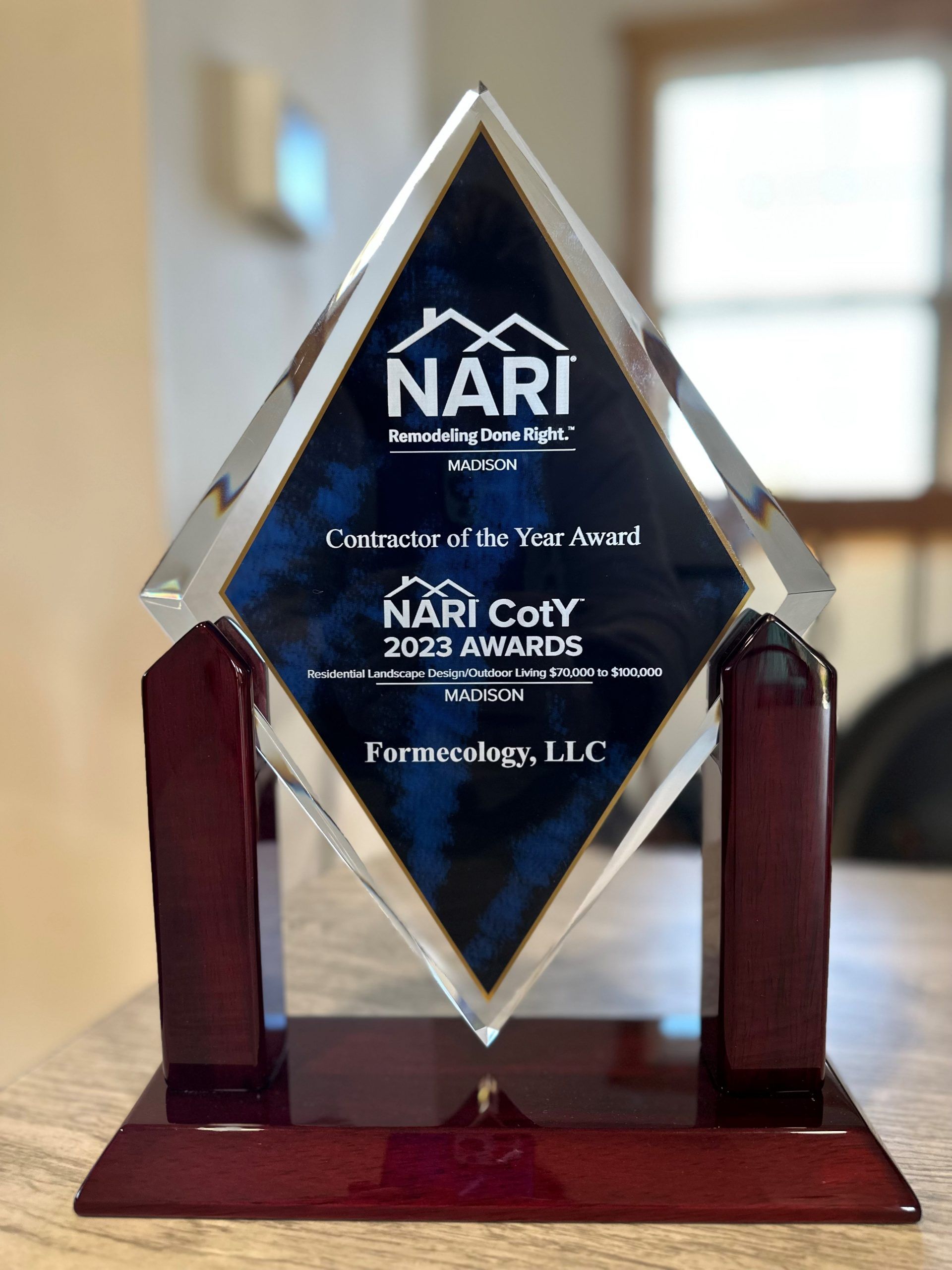
formecology, LLC proudly accepts three awards at the “CotY” (Contractor of the Year) “Celebrating Excellence” ceremony on November 9th! The event was hosted by NARI of Madison (National Association of the Remodeling Industry). NARI is an organization of high-quality remodeling professionals. Its members are committed to integrity, high standards, professional education, ethics and market recognition. The CotY is a prestigious award presented each year to NARI members who have demonstrated outstanding work through their remodeling projects. Winning projects must meet score requirements under the following criteria: To what degree were the expressed needs of the client met? To what degree does the project enhance the existing structures functionally? To what degree does the project enhance the existing structure aesthetically? Is there evidence of superior craftsmanship? Were innovative uses of material and/or methods of construction used in the project?
Show More

Have you ever thought about what happens to all that water when it rains? We all know that water runs downhill, but there are some other interesting consequences that aren’t so obvious. Because we have built homes, roads, sidewalks, parking lots and many other “impervious” surfaces that don’t allow stormwater to soak into the ground, there is often much more water than the limited areas can soak up (infiltrate). We are simply pushing more and more water downstream. Now, this may not seem like a large issue when we only consider an individual site, but when taken cumulatively we can see that urban and residential areas often have more impervious surface than pervious surface. Even farm fields often have drain tile to rapidly remove “excess” water downstream.

Now let’s think again about what happens in a heavy rain. Excessive or poorly managed stormwater has many negative effects on our environment. Here’s how the damage shows up:

When stormwater flows across compacted lawn surfaces, it picks up excess fertilizer, loose soil, and pesticides and carries them into the street or ditch where more debris, auto chemicals and other pollutants are waiting for a free ride downstream.

This contaminated water races straight into engineered drainage systems, such as storm sewers, where more and more water combines from surrounding areas.
This rapidly flowing (and filthy) water is dumped into creeks and streams, where it causes erosion and picks up more soil and debris.

This water eventually causes flooding and degradation of lakes and other water bodies. Oftentimes after large storms, huge plumes of brown, contaminated water are readily visible in aerial photos of lakes. In fact, a large “dead zone” of nearly 6,000-8,000 square miles appears annually in the Gulf of Mexico, due to the large amounts of soil and debris carried into the Gulf by the Mississippi River.

To get a bit of perspective, it’s helpful to consider how stormwater acted in the past. Historically, when it rained, most of the water soaked into the ground at or near the place where it fell. Thick native vegetation would slow the water down and the highly organic soils would readily soak up stormwater. This stormwater was purified by slowly seeping through the soil and plant roots, and it eventually recharged the water table (the source of our drinking water).

No one can argue that hard surfaces like rooftops, roads and driveways aren’t incredibly important to humans, but we need to understand that because we aren’t allowing water to soak into the ground, we are causing more frequent flooding, and increased pollution, and preventing future drinking water supplies from forming. In fact, our existing drinking water wells are drying up and becoming more prone to contamination. We simply need to do a much better job of allowing water into the ground at the spot where it falls.

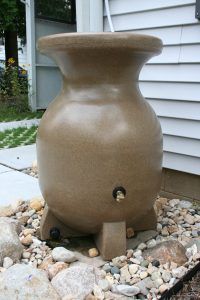
There are some options to help accomplish this goal. Eco-friendly sustainable approaches to stormwater management are becoming more popular, as more people begin to understand the importance of treating water as a resource rather than disposing of it as a waste product. Harvesting stormwater can result in economic benefits to communities by reducing reliance on municipal water supplies. Stormwater can easily be used for irrigation, ornamental water features, and groundwater recharge with a little forethought about how to capture it. Stormwater harvesting is often as simple as diverting rainwater that runs down a residential downspout into a rain barrel, where it can be stored for use in watering your plants.
Ecodriveways are another exciting part of the solution for the environmentally conscious home owner. Because driveways are often the largest impervious surface on a residential site, it is important to consider what happens to the water that falls on them. A well-planned ecodriveway is designed to meet all of the functional needs of the homeowner while at the same time capturing, treating, and infiltrating stormwater.
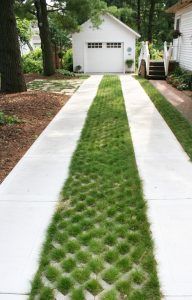
A special type of material known as pervious paving allows water to flow through its surface and into the ground. Options include pervious concrete, pervious asphalt, pavers with voids, and crushed gravel with no fines. These are great options to really maximize the amount of water that’s absorbed, but extra care must be used to design and install the gravel base below the paved surface to allow for infiltration.

When standard concrete or asphalt is the best choice for your driveway needs, there are still ways to make the project more ecofriendly. Minimizing surface area and thoughtfully managing water once it leaves the paved surface are important considerations.

Here are a few options for minimizing impervious surface:

  • Design a driveway for multiple purposes, thereby reducing the need to pave space elsewhere for a patio or work area. Consider using stamped or dyed concrete as a decorative element that differentiates the patio space from the rest of the driveway.

  • Paving only the actual driving area is another great idea to minimize impervious surface. Two strips of paving slightly wider than the tires of a car create a perfectly functional tread driveway that allows for turf or other pervious materials between. In addition to allowing more water to infiltrate, this option often saves money and creates a more visually interesting driveway area.

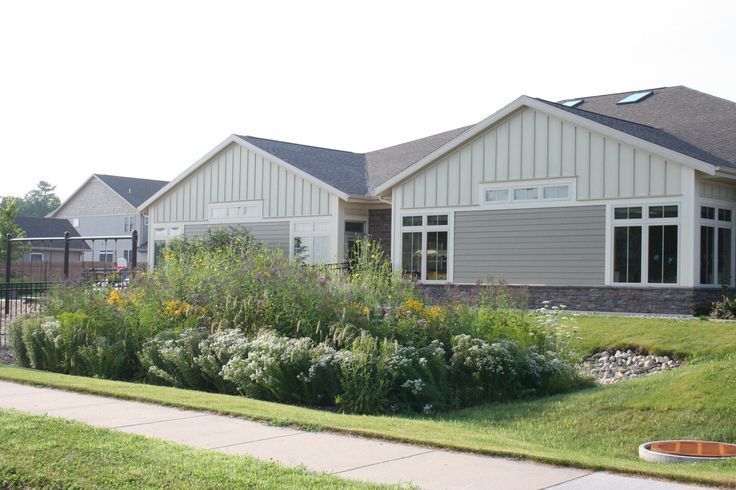
Directing stormwater from the driveway to water quality and management features like rain gardens is another great option. Rain gardens are designed as beautiful garden beds that are graded to allow water to pool temporarily and infiltrate into the ground. Beyond the beauty of the planted native wildflowers & grasses, these gardens draw in many species of songbirds and butterflies which add to their interest and ecological benefit. Driveways can be sloped toward these features or, in more complex settings, simple drains in the concrete can move stormwater to the features.
Ecodriveways can fit both your philosophy and your budget. When considering driveway options, factor the cost of an ecodriveway in combination with other water conservation tools. Look holistically at the site to help determine how your ecodriveway could be constructed for the greatest beneficial impact. To create a successful ecodriveway, consider involving a team of experts who are creative, innovative and experienced. Open up the toolbox of ideas, and stay flexible when considering the options. You will be delighted with the results. And so will Mother Nature!
By formecology LLC April 14, 2026
What Drives the Cost of a Landscape Project? No two landscape projects are the same, which is why pricing can vary so much from one property to another. Understanding what affects cost helps homeowners make better decisions and prioritize where to invest. 1. Site Conditions Your existing property plays a big role in cost. Slopes, drainage issues, heavy soils, limited access for equipment, or grading needs can all add labor and time. 2. Design Complexity (Design + Build Integration) A simple patio and planting plan will cost far less than a multi-level outdoor living space with built-in lighting, seating walls, water features, and custom details. In a design/build approach, complexity goes beyond the layout—it also includes how each part is built, scheduled, and put together on-site. Projects with multiple materials, level changes, and built features require more coordination between planning and installation, as well as more skilled work to bring everything together. 3. Materials Selected Materials do affect cost—natural stone, premium pavers, hardwoods, and custom features are typically more expensive than basic options. However, materials are only one part of the total picture. Why “Just Swapping Materials” Isn’t Always Simple One common misunderstanding is the idea that you can easily lower cost by swapping materials. While that sounds simple, labor, jobsite logistics, and installation challenges often have a bigger impact on price than materials alone. For example, something as "simple as" replacing mulch with cobblestone may still involve: Prep work and grading Removal and disposal of existing materials Tight access that requires hand work Multiple crew members over several days Equipment limits or hauling materials by wheelbarrow In many cases, the time and skilled work needed stay very similar, even if the material changes. 4. Project Size Larger projects naturally require more materials, labor, and time, which increases overall cost. 5. Custom Features Custom-built elements like outdoor kitchens, fireplaces, pergolas, or built-in seating require more planning and skilled installation, which adds to the investment. 6. Access and Logistics Not all job sites are easy to work on. Limited access may require smaller equipment, extra labor, or moving materials by hand, all of which affect time and cost. Why Process Matters as Much as Materials At formecology LLC, we use a combined design and build process. This means we think through how everything will be built, scheduled, and installed—not just how it looks on paper. This includes: Crew size and coordination Equipment access and site logistics Drainage and structural work Order of installation These details aren’t always visible, but they play a major role in both cost and long-term success. Not All Landscape Projects Are the Same Some companies focus on basic installation or simple upgrades, while others specialize in more detailed, custom outdoor spaces built through a full design/build process. At formecology LLC, our focus is on well-planned, well-built outdoor environments that feel like a natural extension of your home. That level of planning and craftsmanship takes more investment—but it also leads to a smoother process and better long-term results. __________________________________________________________________________________________ A well-planned design/build process helps avoid surprises, reduces costly changes, and ensures your investment is used wisely. It’s not just about building a beautiful space—it’s about building it the right way from the start. If you’re considering a project, we’re happy to talk through what’s possible for your space.
By formecology LLC April 14, 2026
How Much Should You Budget for a Landscape Project? One of the first questions homeowners ask when considering a landscape project is: “How much is this going to cost?” The answer depends less on a fixed number and more on the size of the project, site conditions, materials, and how detailed the design is. Having a general range can still help you plan realistically and avoid surprises. For most professionally designed residential landscape projects, budgets typically fall into three broad ranges: Entry-Level Enhancements ($10,000–$30,000) These projects focus on specific improvements such as planting beds, mulch, edging, basic lighting, or small patios and walkways. They’re ideal for refreshing certain areas without a full-yard renovation. Mid-Range Transformations ($30,000–$100,000) This range often includes more complete projects—larger patios, planting plans, outdoor lighting systems, retaining walls, and grading or drainage improvements. These projects start to significantly change how the outdoor space looks and functions. High-End Custom Outdoor Living Spaces ($100,000+) At this level, landscapes are fully customized and often include multiple outdoor living areas, extensive hardscaping, built-in features, water elements, outdoor kitchens, and advanced lighting systems. These projects are tailored to the home and how you want to live outdoors. These ranges are not fixed prices—they are planning guidelines. The final cost depends on your property, your goals, and how the project is designed and built. Phased Projects: A Smart Way to Approach Larger Budgets For homeowners who want to work toward a larger vision, projects can often be completed in phases: Phase 1: Core outdoor living space (patio, grading, primary planting) Phase 2: Additional features (walkways, walls, secondary beds) Phase 3: Enhancements (extensive hardscaping, water features, expanded living areas) This approach allows you to spread investment over time while maintaining a cohesive design.  ___________________________________________________________________________________________ Every property is different, and so is every budget. The key is understanding what you want your outdoor space to do for you, then building a plan that brings that vision to life in a realistic way.
By formecology LLC March 31, 2026
Spring work begins as our crew returns to start cleanups, maintenance, and new landscape projects for the season ahead.
hearty, beautiful native plants
By formecology LLC March 23, 2026
Create a healthier, low-maintenance yard with native plants that conserve water, reduce maintenance, and support pollinators in Wisconsin
December 6, 2023
formecology, LLC proudly accepts three awards at the “CotY” (Contractor of the Year) “Celebrating Excellence” ceremony on November 9th! The event was hosted by NARI of Madison (National Association of the Remodeling Industry). NARI is an organization of high-quality remodeling professionals. Its members are committed to integrity, high standards, professional education, ethics and market recognition. The CotY is a prestigious award presented each year to NARI members who have demonstrated outstanding work through their remodeling projects. Winning projects must meet score requirements under the following criteria: To what degree were the expressed needs of the client met? To what degree does the project enhance the existing structures functionally? To what degree does the project enhance the existing structure aesthetically? Is there evidence of superior craftsmanship? Were innovative uses of material and/or methods of construction used in the project?
December 6, 2023
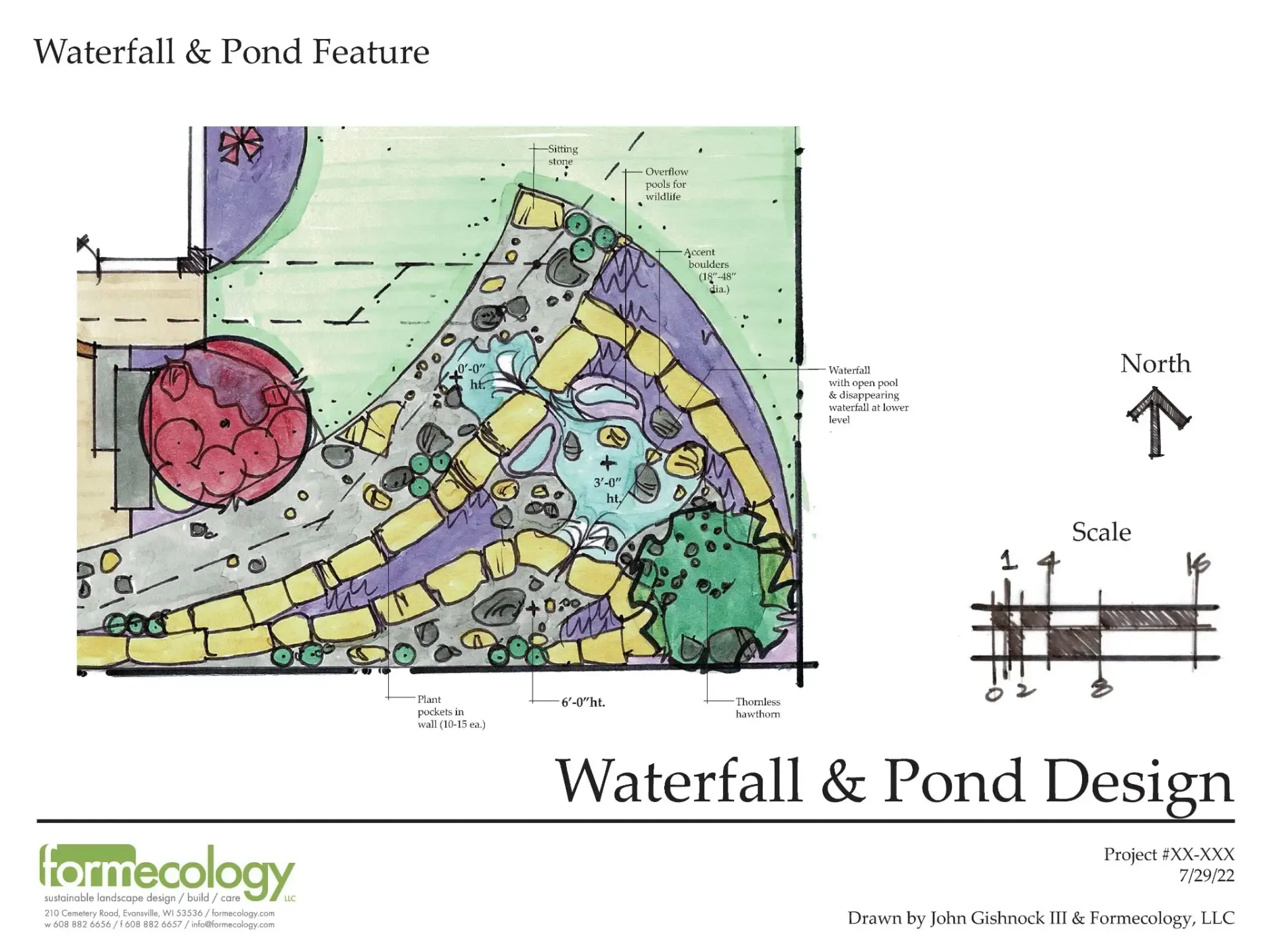
Evolution of a drawing- Here are images from our sketch process from rough to refined. We started with our plan view drawing to come up with an attractive refined perspective to help communicate the idea and project! When drawing, start fast, be loose and get tighter as you go. It’s a layered process so trace paper is perfect. The next step is having our knowledgeable and experienced installation crew bring it from paper to reality!
December 6, 2023
Formecology, LLC is a Finalist in the Madison Magazine’s “Best of Madison 2022”!
December 6, 2023
Formecology, LLC Attains Green Professional Status for their 8th Consecutive Year
December 6, 2023
Formecology, LLC named NARI Regional Team CotY Winner! February 1st, 2021—The National Association of the Remodeling Industry (NARI) named Formecology, LLC (team member) and Artisan Deck and Design, LLC 2021 North Central Regional Contractor of the Year (CotY) winners in the Residential Exterior $50,000-$100,000 category in its’ annual awards competition.
December 6, 2023
Formecology, LLC won three “CotY” (Contractor of the Year) awards at the “Celebrating Excellence” virtual award ceremony on November 5th! The event was hosted by NARI of Madison (National Association of the Remodeling Industry) of which Formecology, LLC has been a member of for seven years. NARI is an organization of high-quality remodeling professionals. Its members are committed to integrity, high standards, professional education, ethics and market recognition. The CotY is a prestigious award presented each year to NARI members who have demonstrated outstanding work through their remodeling projects. As first year entrants, Formecology, LLC won a CotY Award on all three of their entries. The CotY is awarded to projects that meet score requirements under the following criteria: To what degree were the expressed needs of the client met? To what degree does the project enhance the existing structures functionally? To what degree does the project enhance the existing structure aesthetically? Is there evidence of superior craftsmanship? Were innovative uses of material and/or methods of construction used in the project? Formecology, LLC entered a joint project with Artisan Deck and Design, LLC in the category of “Residential Landscape Design/Outdoor Living under $100,000”. This project consisted of a new entryway trellis and natural stone walkway. Both contractors in this winning project will receive a CotY award. Formecology, LLC’s second winning entry was a beautifully constructed “eco-driveway” in the “Residential Landscape Design/Outdoor Living $40,001 to $60,000” category. The driveway was built to help manage and redirect stormwater (and to help keep it from contaminating our lakes and rivers) but can also function as a patio/entertainment space. The third entry and CotY Award winning project was Evansville’s very own “ The Grove Market ” in the “Commercial Exterior” category. Local owners of this farm-to-table bistro hired Formecology, LLC to design and install a safe, ADA-accessible, low-maintenance, inviting outdoor space that tied well into their regionally based, historic building.
December 6, 2023
Achieve a naturally healthy, lower-maintenance, and chemical-free lawn that is better for you, your children, pets, and the environment. Here are some methods to help assist you throughout the year.
More Posts