Jumping Worms & How They Affect Soil & Plant Health

CATEGORIES

LANDSCAPE MASTER PLANNING & GARDEN DESIGN SUSTAINABLE LANDSCAPING & NATIVE PLANTS RAINWATER CONSCIOUS LANDSCAPE FEATURES NATURAL STONE HARDSCAPE & POROUS PAVEMENT NATURAL & ORGANIC LAWN CARE MISC

RECENT POSTS

By formecology LLC April 14, 2026
What Drives the Cost of a Landscape Project? No two landscape projects are the same, which is why pricing can vary so much from one property to another. Understanding what affects cost helps homeowners make better decisions and prioritize where to invest. 1. Site Conditions Your existing property plays a big role in cost. Slopes, drainage issues, heavy soils, limited access for equipment, or grading needs can all add labor and time. 2. Design Complexity (Design + Build Integration) A simple patio and planting plan will cost far less than a multi-level outdoor living space with built-in lighting, seating walls, water features, and custom details. In a design/build approach, complexity goes beyond the layout—it also includes how each part is built, scheduled, and put together on-site. Projects with multiple materials, level changes, and built features require more coordination between planning and installation, as well as more skilled work to bring everything together. 3. Materials Selected Materials do affect cost—natural stone, premium pavers, hardwoods, and custom features are typically more expensive than basic options. However, materials are only one part of the total picture. Why “Just Swapping Materials” Isn’t Always Simple One common misunderstanding is the idea that you can easily lower cost by swapping materials. While that sounds simple, labor, jobsite logistics, and installation challenges often have a bigger impact on price than materials alone. For example, something as "simple as" replacing mulch with cobblestone may still involve: Prep work and grading Removal and disposal of existing materials Tight access that requires hand work Multiple crew members over several days Equipment limits or hauling materials by wheelbarrow In many cases, the time and skilled work needed stay very similar, even if the material changes. 4. Project Size Larger projects naturally require more materials, labor, and time, which increases overall cost. 5. Custom Features Custom-built elements like outdoor kitchens, fireplaces, pergolas, or built-in seating require more planning and skilled installation, which adds to the investment. 6. Access and Logistics Not all job sites are easy to work on. Limited access may require smaller equipment, extra labor, or moving materials by hand, all of which affect time and cost. Why Process Matters as Much as Materials At formecology LLC, we use a combined design and build process. This means we think through how everything will be built, scheduled, and installed—not just how it looks on paper. This includes: Crew size and coordination Equipment access and site logistics Drainage and structural work Order of installation These details aren’t always visible, but they play a major role in both cost and long-term success. Not All Landscape Projects Are the Same Some companies focus on basic installation or simple upgrades, while others specialize in more detailed, custom outdoor spaces built through a full design/build process. At formecology LLC, our focus is on well-planned, well-built outdoor environments that feel like a natural extension of your home. That level of planning and craftsmanship takes more investment—but it also leads to a smoother process and better long-term results. __________________________________________________________________________________________ A well-planned design/build process helps avoid surprises, reduces costly changes, and ensures your investment is used wisely. It’s not just about building a beautiful space—it’s about building it the right way from the start. If you’re considering a project, we’re happy to talk through what’s possible for your space.
By formecology LLC April 14, 2026
How Much Should You Budget for a Landscape Project? One of the first questions homeowners ask when considering a landscape project is: “How much is this going to cost?” The answer depends less on a fixed number and more on the size of the project, site conditions, materials, and how detailed the design is. Having a general range can still help you plan realistically and avoid surprises. For most professionally designed residential landscape projects, budgets typically fall into three broad ranges: Entry-Level Enhancements ($10,000–$30,000) These projects focus on specific improvements such as planting beds, mulch, edging, basic lighting, or small patios and walkways. They’re ideal for refreshing certain areas without a full-yard renovation. Mid-Range Transformations ($30,000–$100,000) This range often includes more complete projects—larger patios, planting plans, outdoor lighting systems, retaining walls, and grading or drainage improvements. These projects start to significantly change how the outdoor space looks and functions. High-End Custom Outdoor Living Spaces ($100,000+) At this level, landscapes are fully customized and often include multiple outdoor living areas, extensive hardscaping, built-in features, water elements, outdoor kitchens, and advanced lighting systems. These projects are tailored to the home and how you want to live outdoors. These ranges are not fixed prices—they are planning guidelines. The final cost depends on your property, your goals, and how the project is designed and built. Phased Projects: A Smart Way to Approach Larger Budgets For homeowners who want to work toward a larger vision, projects can often be completed in phases: Phase 1: Core outdoor living space (patio, grading, primary planting) Phase 2: Additional features (walkways, walls, secondary beds) Phase 3: Enhancements (extensive hardscaping, water features, expanded living areas) This approach allows you to spread investment over time while maintaining a cohesive design.  ___________________________________________________________________________________________ Every property is different, and so is every budget. The key is understanding what you want your outdoor space to do for you, then building a plan that brings that vision to life in a realistic way.
By formecology LLC March 31, 2026
Spring work begins as our crew returns to start cleanups, maintenance, and new landscape projects for the season ahead.
hearty, beautiful native plants
By formecology LLC March 23, 2026
Create a healthier, low-maintenance yard with native plants that conserve water, reduce maintenance, and support pollinators in Wisconsin
December 6, 2023
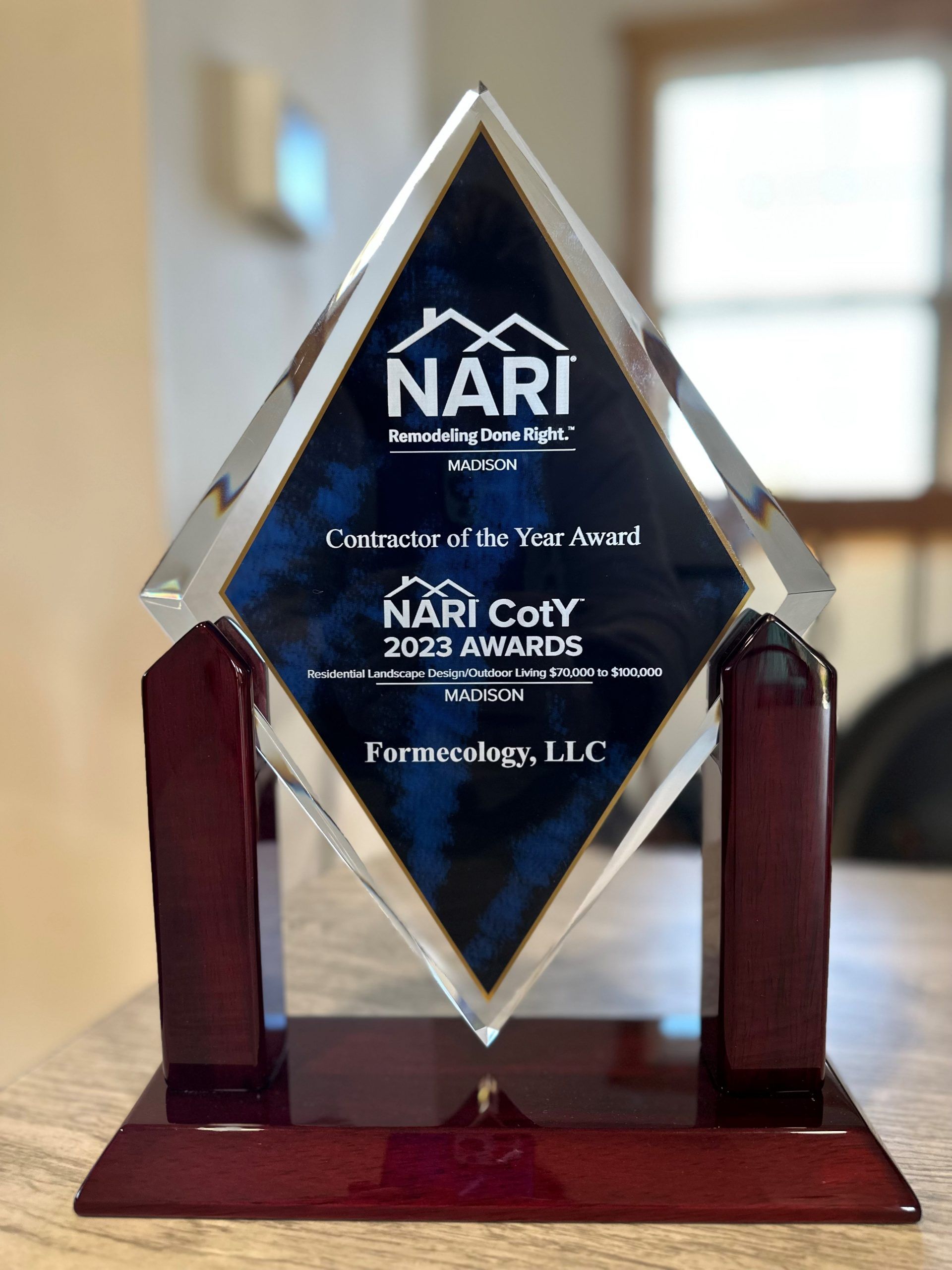
formecology, LLC proudly accepts three awards at the “CotY” (Contractor of the Year) “Celebrating Excellence” ceremony on November 9th! The event was hosted by NARI of Madison (National Association of the Remodeling Industry). NARI is an organization of high-quality remodeling professionals. Its members are committed to integrity, high standards, professional education, ethics and market recognition. The CotY is a prestigious award presented each year to NARI members who have demonstrated outstanding work through their remodeling projects. Winning projects must meet score requirements under the following criteria: To what degree were the expressed needs of the client met? To what degree does the project enhance the existing structures functionally? To what degree does the project enhance the existing structure aesthetically? Is there evidence of superior craftsmanship? Were innovative uses of material and/or methods of construction used in the project?
Show More

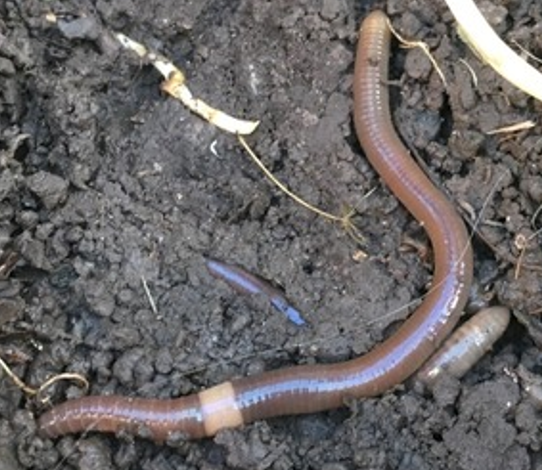
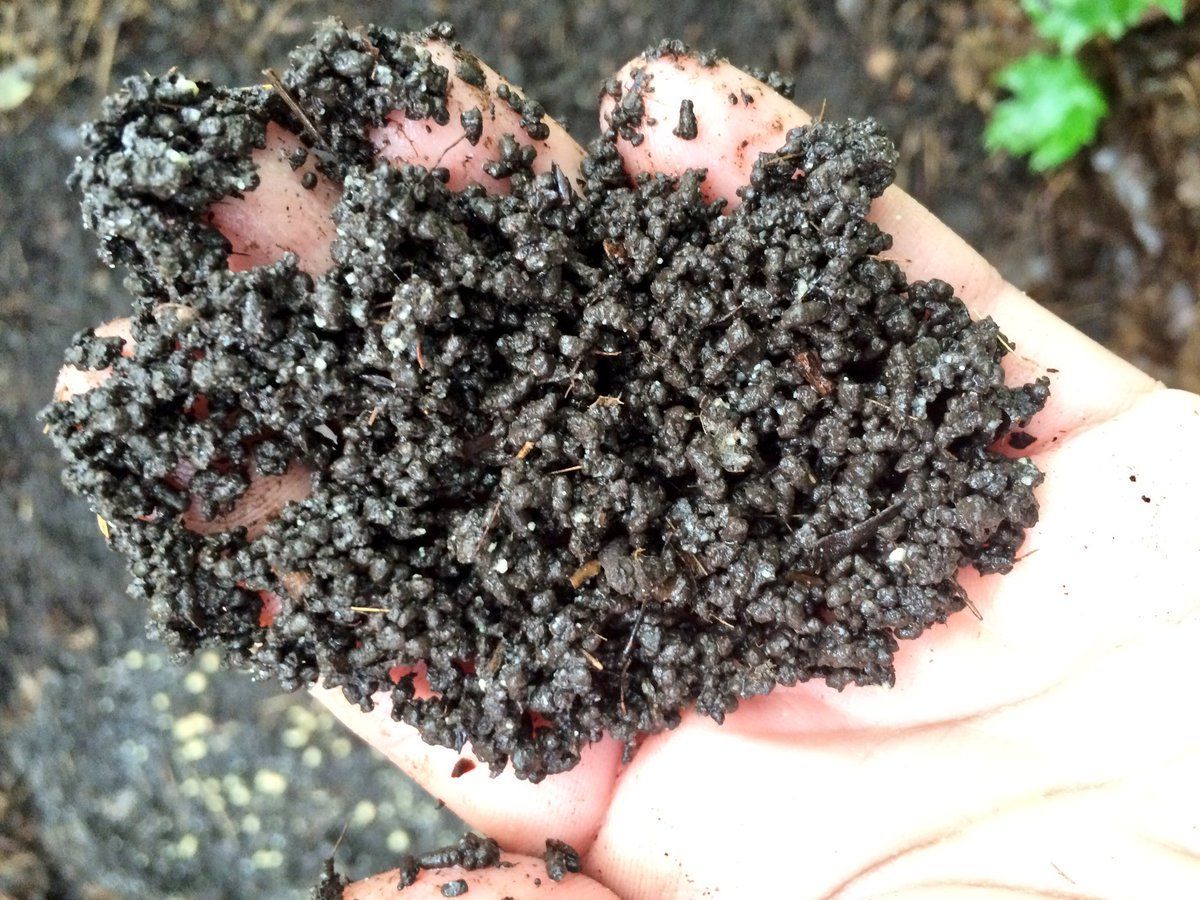
Working on a variety of sites we have seen the growing presence of jumping worms. Often our team will see crumbly, granular, loose soil—a sure sign of their invasion. You may have heard their name mentioned, “Asian jumping worms”, “crazy worms”, or “snake worms”, in horticultural contexts. Normally earthworms are beneficial to soil and plant health, however, these invasive species are destructive with a multitude of effective survival tactics. They first appeared in Wisconsin in 2013, and still there is much uncertainty regarding how they are to be eradicated. There are a few treatments available on the market that we at Formecology may try out for our clients. Before then, we will have to do some test runs. With awareness, background knowledge of their life history and appearance, and management, we can ensure a healthier ecosystem. There is a lot to consider here and research to be done in the coming years. We would love to hear your experiences (successful or not) in dealing with these crazy worms. Leave us a comment below!

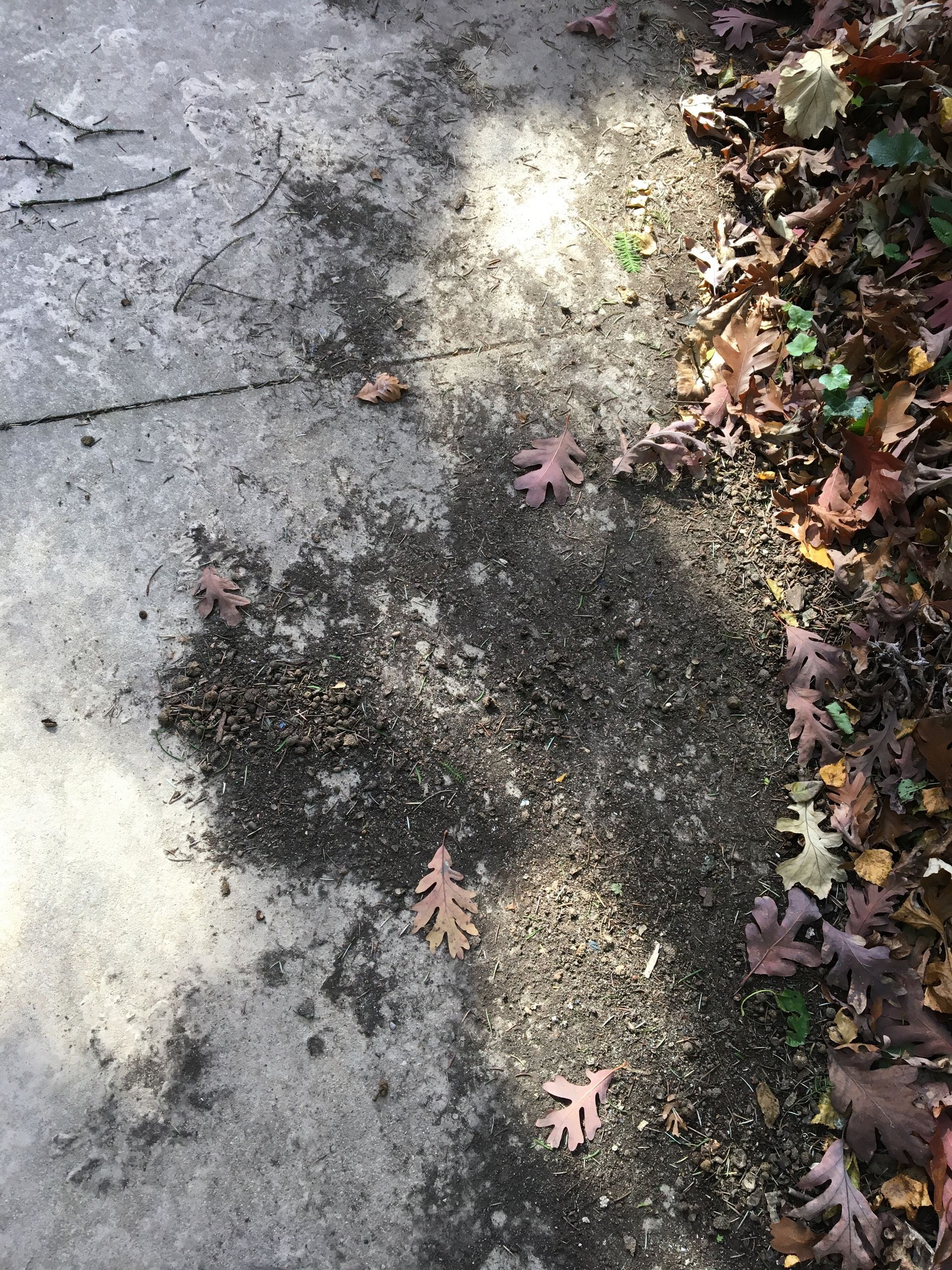
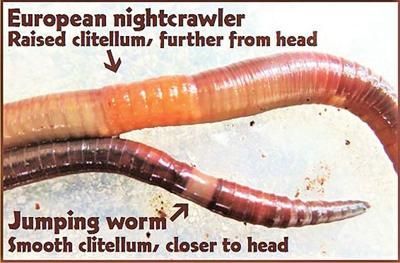
Appearance: “dry” appearance with bluish sheen. White clitellum (band in which the eggs are produced) and a length of 6-8 inches. Worms famously exhibit a fast “flailing” motion. This rapid thrashing helps escape predators with a 50% chance of survival. Presence often marked by pelleted soil clumps on soil surface.

How They Spread: commercial compost and mulch, nursery stock, leaf piles, fish bait, raking, leaf blowing.

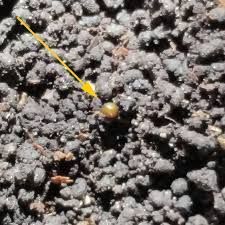
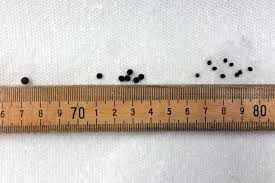
Problem: Jumping worms wreak havoc to soil and plant health. They grow and reproduce more rapidly and consume more nutrients than any other earthworm in Wisconsin. Additionally, their eggs are protected by a cold and drought resistant cocoon that can withstand -40 degrees Fahrenheit! These cocoons are about the size of a mustard seed and are dark brown in color—easily hidden amongst soil.

Jumping worms are parthenogenic, meaning they do not require a mate to reproduce. Worms typically produce up to 60 cocoons per clutch and can complete 2 generations within one year. These worms move fast too, expanding their territory up to 40 yards a year.

These worms feed on plant roots, and beneficial mycorrhizae fungi, and disturb healthy soil. Soil affected by jumping worms has decreased moisture, compacted soil, increased erosion, and an increased risk of pathogens. This soil proves to be poor in structure and support for plants. In turn, this soil harbors a poor quality environment for native plants to grow and gives invasive plant species a chance to establish themselves. In a jumping worm-invaded habitat canopy cover may be thinned out as well as ground cover. The lack of vegetation exposes ground dwelling critters to potential predators resulting in reduced biodiversity of animals.

Another issue presented by the worms is their 80% bio-accumulation of airborne heavy metals. Animals consumed by humans, such as chickens, eat these worms, and the heavy metals are passed down to humans causing potential health issues.

Where: Dwell on soil surface, no deeper than 2-4 inches below the soil.

Life Cycle:

APR-MAY: worms hatch from egg/cocoon

JUN-JUL: worms feed & grow ßthis is the best time to conduct an initial treatment

AUG-SEP: worms lay eggs ß best time to conduct 2nd treatment

1ST FREEZE: adult worms die

WINTER: eggs are protected in cocoons

Management:

Prevention: Buy landscape materials (plants, compost, mulch) free of cocoons and worms. Purchase mulch and compost that has been heated to 140 degrees Fahrenheit. Cocoons cannot survive beyond 104 degrees as well as pathogens. The Flower Factory nursery (located in Stoughton) has a 100% jumping worm-free guarantee as they sterilize their soil.

If spotted: remove and destroy worms by sealing in a bag and throwing away. Apply treatment.

Treatments:

  1. Early Bird: Advertised as a 3-0-1 fertilizer that was originally developed for golf course turf. Contains chicken droppings, kelp, and tea seed oil. The solution is potent and is to be diluted 20x before application. It is not recommended to spray an entire soil patch affected by worms, rather apply to new plants being introduced to the garden. If you do end up treating a large portion of soil, ensure the solution does not go further than 6 inches below, as that is where beneficial earthworms dwell. Within 10 minutes of application worms come to the soil surface. Within 20 minutes the worms are dead. Something to consider is that Early Bird lake run-off could harm fish.

  2. Finely-ground Biochar: Just a small amount added to infested soil can kill worms in 16 days. The sharp edges of the charcoal are designed to cut the guts of the worms. A question that popped into our heads: is biochar selective for crazy worms, or does it harm beneficial worms as well?

  3. Fungus: Bavaria bassiana (BotaniGard): Secretes enzymes that weaken bugs’ coats. Effectively kills worms in two weeks and kills approximately a ¼ of cocoons. We wonder if this fungus would be harmful to beneficial insects, like our pollinators.

While it is too late in the season for treatment application, Formecology is keeping its eyes out for new, eco-friendly, safe solutions. Stay tuned!
By formecology LLC April 14, 2026
What Drives the Cost of a Landscape Project? No two landscape projects are the same, which is why pricing can vary so much from one property to another. Understanding what affects cost helps homeowners make better decisions and prioritize where to invest. 1. Site Conditions Your existing property plays a big role in cost. Slopes, drainage issues, heavy soils, limited access for equipment, or grading needs can all add labor and time. 2. Design Complexity (Design + Build Integration) A simple patio and planting plan will cost far less than a multi-level outdoor living space with built-in lighting, seating walls, water features, and custom details. In a design/build approach, complexity goes beyond the layout—it also includes how each part is built, scheduled, and put together on-site. Projects with multiple materials, level changes, and built features require more coordination between planning and installation, as well as more skilled work to bring everything together. 3. Materials Selected Materials do affect cost—natural stone, premium pavers, hardwoods, and custom features are typically more expensive than basic options. However, materials are only one part of the total picture. Why “Just Swapping Materials” Isn’t Always Simple One common misunderstanding is the idea that you can easily lower cost by swapping materials. While that sounds simple, labor, jobsite logistics, and installation challenges often have a bigger impact on price than materials alone. For example, something as "simple as" replacing mulch with cobblestone may still involve: Prep work and grading Removal and disposal of existing materials Tight access that requires hand work Multiple crew members over several days Equipment limits or hauling materials by wheelbarrow In many cases, the time and skilled work needed stay very similar, even if the material changes. 4. Project Size Larger projects naturally require more materials, labor, and time, which increases overall cost. 5. Custom Features Custom-built elements like outdoor kitchens, fireplaces, pergolas, or built-in seating require more planning and skilled installation, which adds to the investment. 6. Access and Logistics Not all job sites are easy to work on. Limited access may require smaller equipment, extra labor, or moving materials by hand, all of which affect time and cost. Why Process Matters as Much as Materials At formecology LLC, we use a combined design and build process. This means we think through how everything will be built, scheduled, and installed—not just how it looks on paper. This includes: Crew size and coordination Equipment access and site logistics Drainage and structural work Order of installation These details aren’t always visible, but they play a major role in both cost and long-term success. Not All Landscape Projects Are the Same Some companies focus on basic installation or simple upgrades, while others specialize in more detailed, custom outdoor spaces built through a full design/build process. At formecology LLC, our focus is on well-planned, well-built outdoor environments that feel like a natural extension of your home. That level of planning and craftsmanship takes more investment—but it also leads to a smoother process and better long-term results. __________________________________________________________________________________________ A well-planned design/build process helps avoid surprises, reduces costly changes, and ensures your investment is used wisely. It’s not just about building a beautiful space—it’s about building it the right way from the start. If you’re considering a project, we’re happy to talk through what’s possible for your space.
By formecology LLC April 14, 2026
How Much Should You Budget for a Landscape Project? One of the first questions homeowners ask when considering a landscape project is: “How much is this going to cost?” The answer depends less on a fixed number and more on the size of the project, site conditions, materials, and how detailed the design is. Having a general range can still help you plan realistically and avoid surprises. For most professionally designed residential landscape projects, budgets typically fall into three broad ranges: Entry-Level Enhancements ($10,000–$30,000) These projects focus on specific improvements such as planting beds, mulch, edging, basic lighting, or small patios and walkways. They’re ideal for refreshing certain areas without a full-yard renovation. Mid-Range Transformations ($30,000–$100,000) This range often includes more complete projects—larger patios, planting plans, outdoor lighting systems, retaining walls, and grading or drainage improvements. These projects start to significantly change how the outdoor space looks and functions. High-End Custom Outdoor Living Spaces ($100,000+) At this level, landscapes are fully customized and often include multiple outdoor living areas, extensive hardscaping, built-in features, water elements, outdoor kitchens, and advanced lighting systems. These projects are tailored to the home and how you want to live outdoors. These ranges are not fixed prices—they are planning guidelines. The final cost depends on your property, your goals, and how the project is designed and built. Phased Projects: A Smart Way to Approach Larger Budgets For homeowners who want to work toward a larger vision, projects can often be completed in phases: Phase 1: Core outdoor living space (patio, grading, primary planting) Phase 2: Additional features (walkways, walls, secondary beds) Phase 3: Enhancements (extensive hardscaping, water features, expanded living areas) This approach allows you to spread investment over time while maintaining a cohesive design.  ___________________________________________________________________________________________ Every property is different, and so is every budget. The key is understanding what you want your outdoor space to do for you, then building a plan that brings that vision to life in a realistic way.
By formecology LLC March 31, 2026
Spring work begins as our crew returns to start cleanups, maintenance, and new landscape projects for the season ahead.
hearty, beautiful native plants
By formecology LLC March 23, 2026
Create a healthier, low-maintenance yard with native plants that conserve water, reduce maintenance, and support pollinators in Wisconsin
December 6, 2023
formecology, LLC proudly accepts three awards at the “CotY” (Contractor of the Year) “Celebrating Excellence” ceremony on November 9th! The event was hosted by NARI of Madison (National Association of the Remodeling Industry). NARI is an organization of high-quality remodeling professionals. Its members are committed to integrity, high standards, professional education, ethics and market recognition. The CotY is a prestigious award presented each year to NARI members who have demonstrated outstanding work through their remodeling projects. Winning projects must meet score requirements under the following criteria: To what degree were the expressed needs of the client met? To what degree does the project enhance the existing structures functionally? To what degree does the project enhance the existing structure aesthetically? Is there evidence of superior craftsmanship? Were innovative uses of material and/or methods of construction used in the project?
December 6, 2023
Evolution of a drawing- Here are images from our sketch process from rough to refined. We started with our plan view drawing to come up with an attractive refined perspective to help communicate the idea and project! When drawing, start fast, be loose and get tighter as you go. It’s a layered process so trace paper is perfect. The next step is having our knowledgeable and experienced installation crew bring it from paper to reality!
December 6, 2023
Formecology, LLC is a Finalist in the Madison Magazine’s “Best of Madison 2022”!
December 6, 2023
Formecology, LLC Attains Green Professional Status for their 8th Consecutive Year
December 6, 2023
Formecology, LLC named NARI Regional Team CotY Winner! February 1st, 2021—The National Association of the Remodeling Industry (NARI) named Formecology, LLC (team member) and Artisan Deck and Design, LLC 2021 North Central Regional Contractor of the Year (CotY) winners in the Residential Exterior $50,000-$100,000 category in its’ annual awards competition.
December 6, 2023
Formecology, LLC won three “CotY” (Contractor of the Year) awards at the “Celebrating Excellence” virtual award ceremony on November 5th! The event was hosted by NARI of Madison (National Association of the Remodeling Industry) of which Formecology, LLC has been a member of for seven years. NARI is an organization of high-quality remodeling professionals. Its members are committed to integrity, high standards, professional education, ethics and market recognition. The CotY is a prestigious award presented each year to NARI members who have demonstrated outstanding work through their remodeling projects. As first year entrants, Formecology, LLC won a CotY Award on all three of their entries. The CotY is awarded to projects that meet score requirements under the following criteria: To what degree were the expressed needs of the client met? To what degree does the project enhance the existing structures functionally? To what degree does the project enhance the existing structure aesthetically? Is there evidence of superior craftsmanship? Were innovative uses of material and/or methods of construction used in the project? Formecology, LLC entered a joint project with Artisan Deck and Design, LLC in the category of “Residential Landscape Design/Outdoor Living under $100,000”. This project consisted of a new entryway trellis and natural stone walkway. Both contractors in this winning project will receive a CotY award. Formecology, LLC’s second winning entry was a beautifully constructed “eco-driveway” in the “Residential Landscape Design/Outdoor Living $40,001 to $60,000” category. The driveway was built to help manage and redirect stormwater (and to help keep it from contaminating our lakes and rivers) but can also function as a patio/entertainment space. The third entry and CotY Award winning project was Evansville’s very own “ The Grove Market ” in the “Commercial Exterior” category. Local owners of this farm-to-table bistro hired Formecology, LLC to design and install a safe, ADA-accessible, low-maintenance, inviting outdoor space that tied well into their regionally based, historic building.
December 6, 2023
Achieve a naturally healthy, lower-maintenance, and chemical-free lawn that is better for you, your children, pets, and the environment. Here are some methods to help assist you throughout the year.
More Posts